Category: Real Estate Photography

  • 7 Best Tripod for Real Estate Photography in 2024: Top Picks for Perfect Shots

    7 Best Tripod for Real Estate Photography in 2024: Top Picks for Perfect Shots

    As real estate photographers, we know the importance of capturing stunning property images. The right tripod can make a significant difference in the quality of our photos.

    With so many options available, it can be challenging to find the best tripod to suit our specific needs.

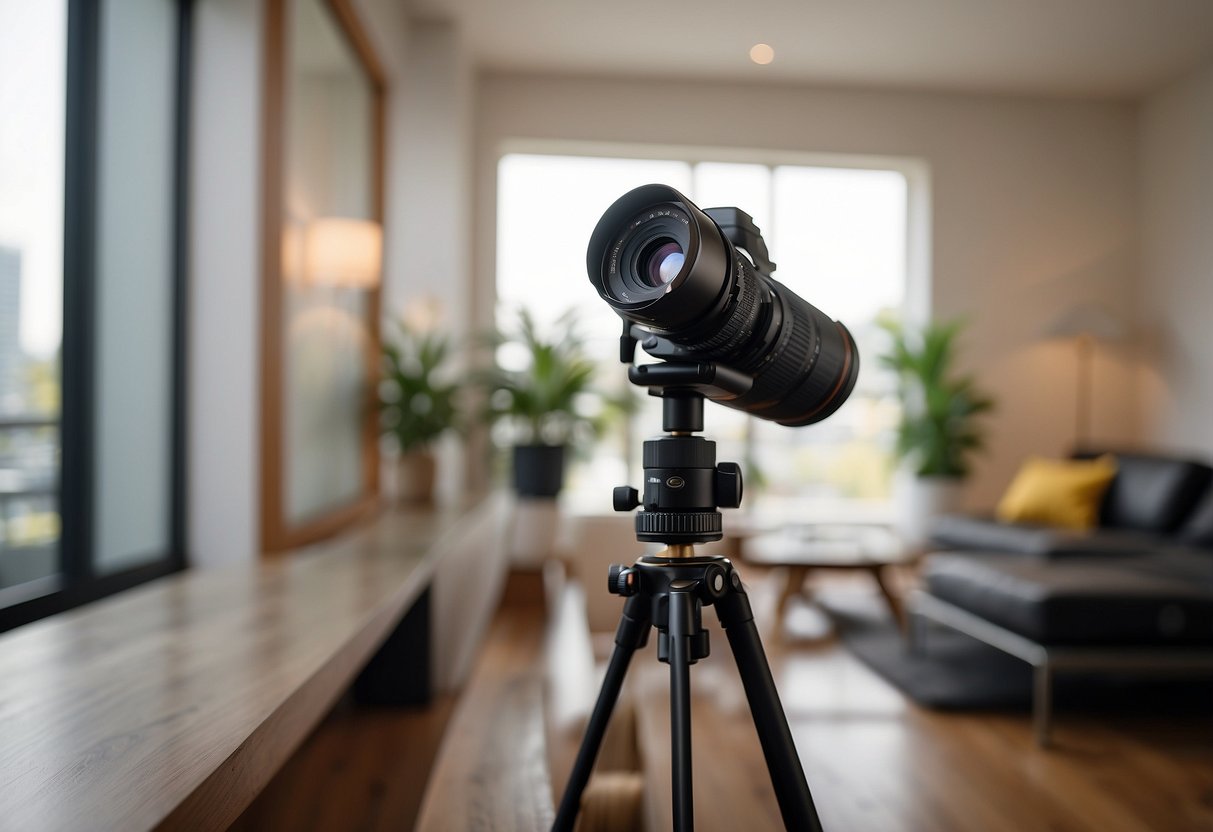
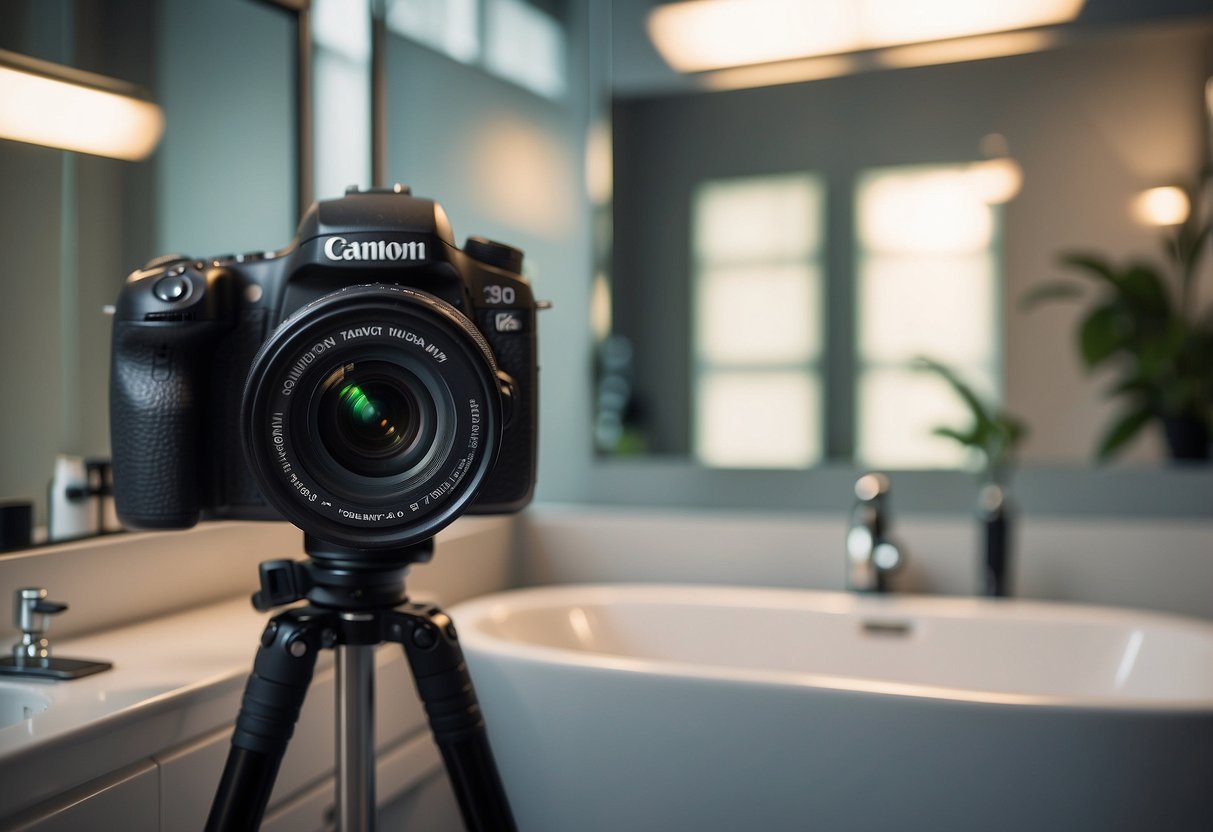
    A camera on a stable tripod positioned in a well-lit room with wide-angle lens and adjustable height for capturing real estate interiors

    What are the best tripods for real estate photography in 2024? We will explore various options, considering factors such as stability, portability, and budget. This guide aims to provide practical recommendations for both beginners and experienced photographers looking to enhance their real estate photography.

    1) Manfrotto MT190XPRO4

    The Manfrotto MT190XPRO4 is an excellent choice for real estate photography. Its aluminum build is both sturdy and lightweight, making it easy for us to carry around.

    One of its standout features is the 90° column system. This allows us to shoot from unique angles without moving the tripod. We can easily switch from horizontal to vertical positions.

    We appreciate its quick power locks. These locks secure the legs quickly and firmly. Setting up and taking down the tripod becomes a breeze, saving us time during shoots.

    The tripod also comes with an Easy Link connector. This feature allows us to attach various accessories, such as an LED light or reflector. It increases the versatility of our setup.

    Additionally, the Manfrotto MT190XPRO4 offers impressive stability. Its rubber feet ensure that the tripod stays in place, even on slippery surfaces. This stability helps us capture sharp, clear images.

    For those who require precise adjustments, the leg-angle selectors are very practical. We can independently adjust each leg to three different angles. This adaptability is useful in uneven terrain.

    Finally, the tripod is compatible with various heads, giving us flexibility in choosing the right head for our camera. This compatibility makes it a versatile tool in our photography kit.

    For more information about the Manfrotto MT190XPRO4, visit Manfrotto MT190XPRO4 Tripod Review.

    2) Joby Gorillapod 5K

    The Joby Gorillapod 5K is one of the best tripod options for real estate photographers. It offers unmatched flexibility with its wrap-around legs, allowing us to mount our cameras virtually anywhere. This is particularly useful for capturing unique angles in tight spaces.

    Its ability to hold up to 11 pounds of equipment makes it a robust choice for heavier DSLR cameras. The BallHead 5K provides smooth adjustments, which lets us make precise compositions effortlessly. The knobs on the BallHead 5K have a soft, grippy texture, adding to the ease of use.

    The Gorillapod 5K is not just flexible but also portable and lightweight, making it easy for us to carry it around on various shoots. Its compact size means it won’t be a burden in our camera bags. For those who need the versatility to switch from floor to wall mounts, the flexible legs are game changers.

    The stable design helps to reduce shaky shots, providing better image clarity. In summary, the Joby Gorillapod 5K is a versatile, durable, and highly portable tripod that fits well within the needs of real estate photographers looking for reliability and flexibility. For more on its features, you can visit Imaging Resource’s review of the Joby Gorillapod 5K.

    3) Neewer Carbon Fiber Tripod

    The Neewer Carbon Fiber Tripod is a top choice for real estate photography. This tripod is lightweight yet durable, thanks to its carbon fiber construction. We find it easy to carry around during shoots, making it perfect for both indoor and outdoor settings.

    One of the standout features is its adjustable central column. It allows us to capture shots from different heights, giving more flexibility. The legs are also adjustable, which helps in achieving stable shots even on uneven surfaces.

    Another advantage is the tripod’s quick release plate. This feature makes it simple to mount and dismount the camera. We can quickly switch between different camera setups, saving valuable time during shoots.

    The Neewer Carbon Fiber Tripod also comes with a carrying bag. This adds to its portability, helping us keep the tripod protected when not in use. The bag is padded, offering extra protection against bumps and scratches.

    This tripod can support a significant amount of weight. It can handle our heavy DSLR cameras and lenses comfortably, without compromising stability. The Neewer Carbon Fiber Tripod is an excellent tool for achieving high-quality, professional real estate photos. For more details, you can refer to the Neewer Carbon Fiber Tripod.

    4) Vanguard Alta Pro 263AB

    The Vanguard Alta Pro 263AB is a versatile and reliable tripod. It is ideal for our real estate photography needs. This tripod is highly praised for its flexibility and stability.

    One of its key features is the multi-angle central column system. This allows us to set the camera at various angles, perfect for capturing unique shots. The tripod legs adjust to 25°, 50°, and 80° angles.

    The Alta Pro 263AB is made from aluminum, making it sturdy yet lightweight. This construction supports up to 15 pounds, which is useful for heavier camera equipment. Its legs stay steady even in windy conditions, offering reliable performance in various environments as noted by Photography Talk.

    Another notable feature is the quick-flip leg locks. These allow us to set up and adjust the tripod quickly, saving valuable time on shoots. The non-slip, spiked rubber feet enhance stability on different surfaces.

    The Vanguard Alta Pro 263AB includes a smooth ball head, ensuring seamless camera movements. This makes it easy to capture panoramic shots, which are often crucial in real estate photography. The tripod’s bubble level helps maintain an even frame, crucial for quality shots.

    5) Benro Mach3 TMA38CL

    The Benro Mach3 TMA38CL is a solid choice for real estate photography. It extends to a height of 153 cm with the column down. This feature makes it perfect for capturing images at various heights without compromising stability.

    We appreciate the carbon fiber build. This material is not only durable but also lightweight, making it easier to carry around during shoots.

    One detail we find handy is the set of spikes included with this tripod. These can be screwed into the bottom for extra grip on uneven surfaces, ensuring stable shots in any environment.

    It also comes with a nice carrying bag. Although most users might not use this often, it’s a thoughtful addition for those who do like to keep their equipment organized.

    Many professional photographers recommend this model. It’s praised for its rugged construction and reliability, especially for those who need consistent performance in varied conditions.

    For anyone looking for a dependable and well-built tripod, the Benro Mach3 TMA38CL is worth considering. Check out this detailed Benro TMA38CL Mach 3 Tripod Review for more insights.

    6) Gitzo GK1555T-82TQD

    The Gitzo GK1555T-82TQD is a reliable choice for real estate photography. This tripod is crafted from carbon fiber, making it both strong and lightweight. It’s capable of holding a full-frame DSLR and a large zoom lens, with a load capacity of 10kg.

    One of the standout features is its compact design. The legs can reverse-fold around the center column and head, reducing its size to just 35.5 cm. This makes it highly portable and easy to fit into travel bags.

    The tripod comes with the GH1382TQD Center Ball Head. Although opinions vary, it performs well and integrates cleverly with the legs for efficient packing.

    Its narrow chassis can reach a relatively tall height, providing good stability. However, balanced placement can be a bit tricky due to the higher camera weight over the apex. Still, its rigidity helps in maintaining steady shots.

    For those looking for quality and compactness, the Gitzo GK1555T-82TQD is a great match. Check out the in-depth review on Amateur Photographer for more details. For purchasing options and additional specs, visit the Gitzo product page.

    7) MeFOTO RoadTrip Classic

    The MeFOTO RoadTrip Classic is a versatile option for real estate photography. This tripod is compact and easy to carry, making it ideal for photographers who move between different properties.

    One feature we appreciate is its ability to convert into a monopod. This adds to its versatility without needing extra tools.

    The tripod supports point-and-shoot, mirrorless, and DSLR cameras with zoom lenses.

    The RoadTrip Classic has a solid build quality. Even in challenging conditions, it remains stable.

    The twist locks, while taking a bit more effort, ensure the legs stay secure.

    We find the tripod’s carrying case useful. It protects the tripod during travel.

    Its multiple color options let you choose one that suits your style.

    One drawback is the twist locks require several turns to tighten. This might be inconvenient for quick setups.

    The uniform design of the control knobs can be confusing at times, especially when adjustments are needed on-the-fly.

    Despite these minor issues, the MeFOTO RoadTrip Classic remains a strong contender. It’s a reliable and flexible choice for real estate photographers. More details can be found on the MeFOTO website.

    Importance Of A Good Tripod

    When we talk about real estate photography, having a good tripod is critical.

    Stability matters, especially when capturing sharp images in low light.

    A high-quality tripod keeps our camera steady. This allows for long exposure shots, which can make a big difference in poorly-lit rooms.

    No more blurry photos due to camera shake.

    Using a tripod also helps with composition.

    We can frame our shots perfectly, ensuring all lines and angles are just right.

    This is a key to making rooms look spacious and appealing to potential buyers.

    Having a good tripod makes it easier to take HDR (High Dynamic Range) photos.

    By keeping the camera steady, we can take multiple shots with different exposures and blend them for a perfect photo.

    Portability is another important factor.

    Some of the best tripods for real estate photography are lightweight and easy to carry, making our job more convenient without compromising stability.

    Key Features To Look For

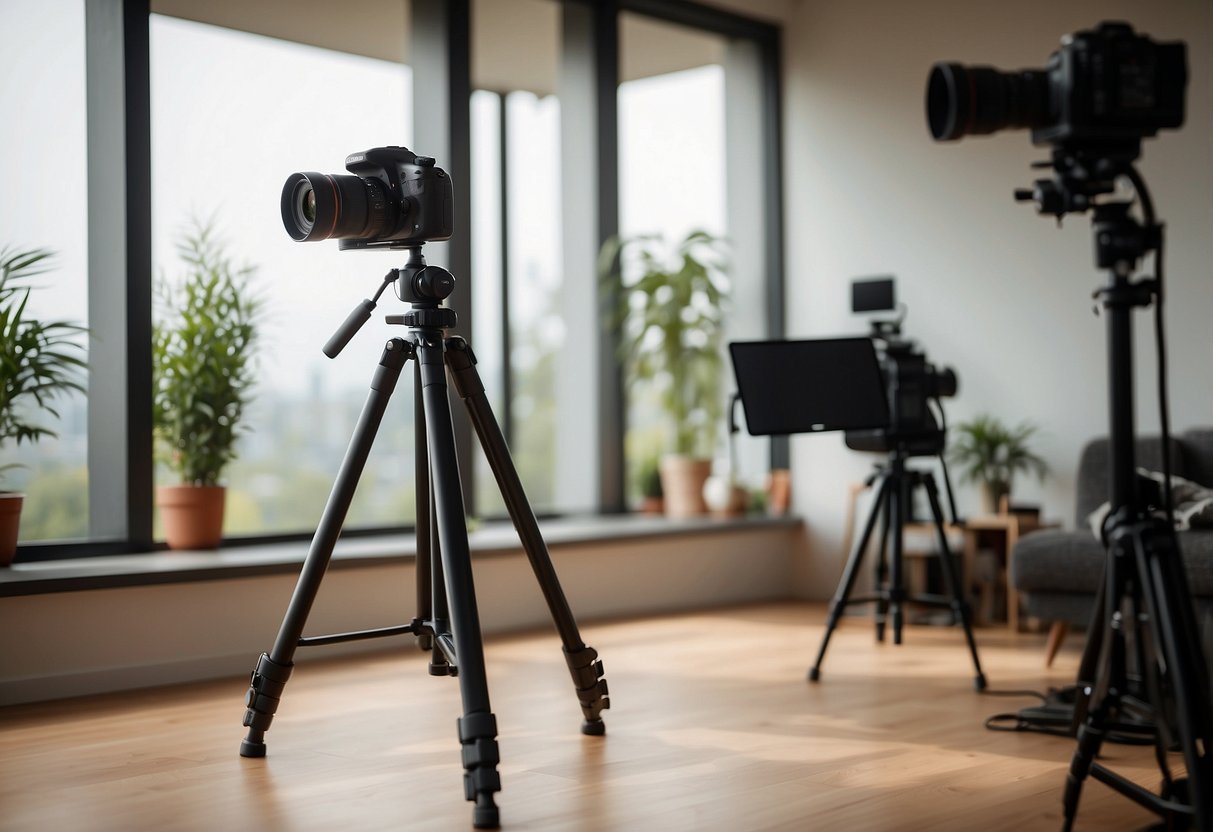
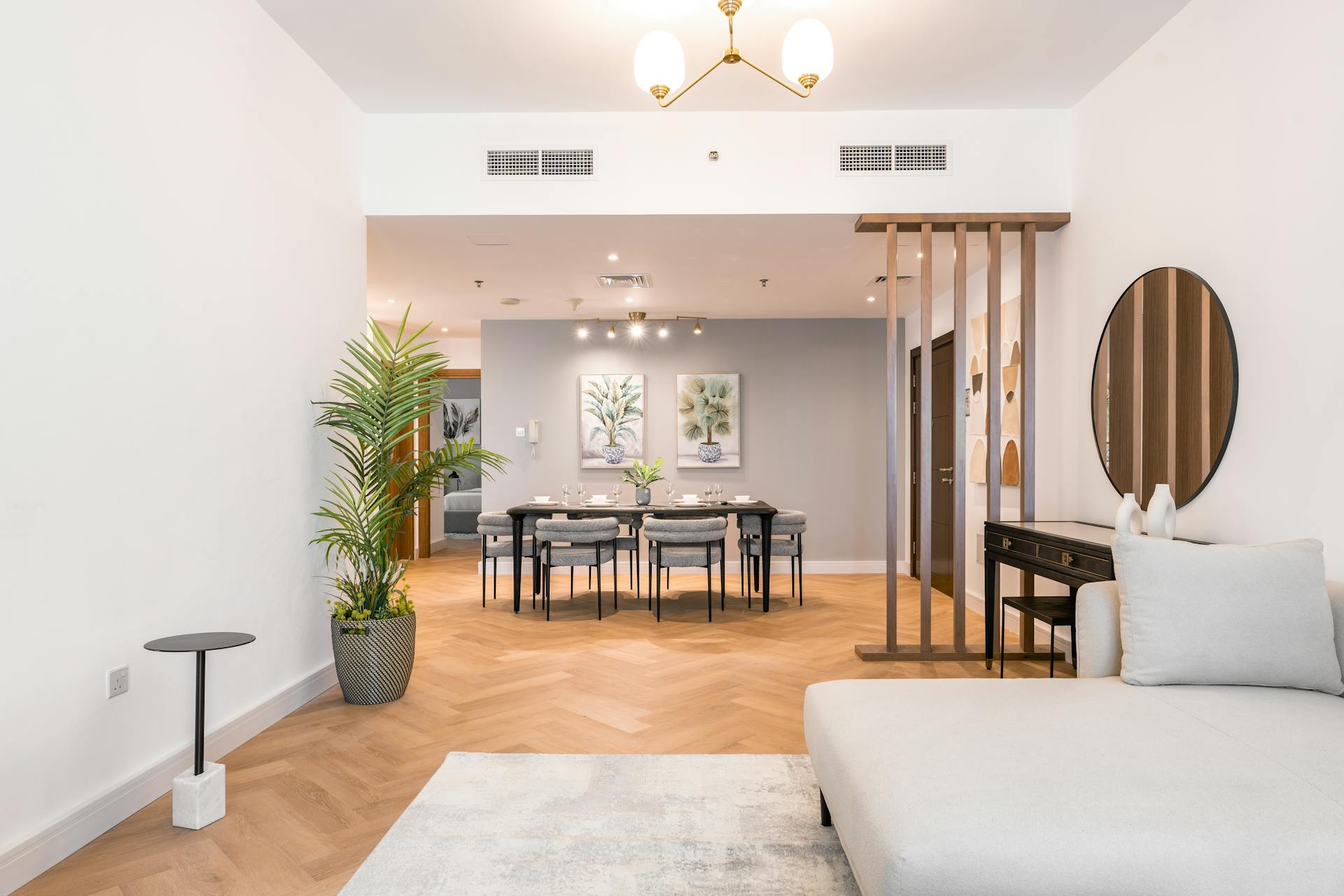
    A tripod set up in a spacious, well-lit room with large windows, capturing the interior of a modern, stylish home

    When choosing the best tripod for real estate photography, we need to focus on three main features: stability, height adjustability, and portability.

    These aspects are crucial for capturing clear, high-quality images in various settings.

    Stability

    Stability is paramount because it directly affects the sharpness of our photos.

    A well-built tripod minimizes camera shake and movement.

    Look for tripods made from durable materials like aluminum or carbon fiber, offering a solid, stable foundation.

    Tripod legs should have non-slip rubber feet or spikes for different surfaces.

    Additionally, a tripod with a center weight hook allows us to add extra weight, increasing its steadiness in windy conditions.

    Leg locks also play a crucial role.

    Twist or flip locks should be dependable and easy to use, ensuring the tripod does not collapse unintentionally during a shoot.

    Height Adjustability

    Height adjustability ensures we can capture shots from various angles.

    Ideal tripods offer a wide range of height settings, from very low to high.

    This versatility helps us shoot different perspectives, whether it’s a close-up detail or an overarching room view.

    Tripods with adjustable leg angles let us position the camera at low heights.

    Models with a center column can extend further, giving extra height when needed.

    Remember to consider the maximum and minimum height specifications.

    A good tripod should meet our height needs without compromising stability.

    Portability

    Portability is essential, especially when moving between different properties.

    A lightweight tripod is easier to carry without sacrificing stability.

    Carbon fiber tripods are often lighter than aluminum ones, though they can be more expensive.

    Folded length is another factor.

    Compact tripods that fold down small are easier to transport and store.

    Features like quick-release mechanisms for the camera and easy folding systems for the legs enhance convenience.

    Some tripods come with carry bags, making transportation even simpler.

    Lightweight, compact, and easy to set up tripods save us time and effort during our busy shooting schedule.

    Tips For Using A Tripod In Real Estate Photography

    To get the most out of your tripod in real estate photography, it’s important to focus on camera angles, lighting, and specific shots like floor plans.

    Paying attention to these aspects will enhance the quality and clarity of your photos.

    Optimal Camera Angles

    When setting up your tripod, we should place the camera at eye level.

    This helps to create a natural perspective and is especially useful in living rooms or bedrooms.

    Using a wide-angle lens can capture more of the room, but we need to be cautious to avoid distortion.

    Place the tripod in the corner of the room to get the most comprehensive shots.

    Adjusting the height of the tripod can also provide better angles for different spaces.

    For instance, lowering the tripod can make small rooms seem more spacious.

    Lighting Considerations

    Lighting can make or break a real estate photograph.

    We should aim to shoot during the daytime when there’s plenty of natural light.

    Using a tripod allows us to take longer exposures without any blurriness, which is ideal for low-light conditions.

    Balance artificial and natural light for the best results.

    Position the tripod where shadows are minimal, as harsh shadows can distract from the room’s features.

    If we need to use artificial lights, softboxes can help diffuse the light and create a more even spread.

    Floor Plan Shoots

    For floor plan shots, we should place the tripod directly above the area to be photographed.

    This often means getting an overhead shot, which can be tricky without the right equipment.

    Using a tripod with an adjustable center column can allow us to angle the camera downwards easily.

    We should ensure that the floor plan is well-lit and free from clutter to make the layout clear.

    Adjust our camera settings to a smaller aperture for these shots to keep everything in focus.

    This ensures that every detail in the floor plan is sharp and easy to read.

    Frequently Asked Questions

    In real estate photography, selecting the right tripod is essential for achieving stable and high-quality images. Here, we address some common questions to guide you in choosing the best tripod for your needs.

    What features should I look for in a tripod for real estate photography?

    Key features to look for include stability, adjustable height, weight capacity, and ease of use.

    Look for a tripod with a sturdy build and smooth adjustments.

    It’s helpful if the tripod is lightweight yet strong, as we often need to move it around.

    Which Manfrotto tripod models are the best for architectural and real estate photography?

    The Manfrotto MT190XPRO4 is highly recommended. It offers stability, flexibility, and easy adjustments.

    Another good option is the Manfrotto 475B Pro, known for its robust build and reliable performance.

    Can the Manfrotto 055 Aluminum 3-section Tripod Kit meet the needs of real estate photographers?

    Yes, the Manfrotto 055 Aluminum 3-Section Tripod Kit is an excellent choice.

    It provides durability, stability, and versatile head options, making it suitable for various angles and heights needed in real estate photography.

    Is there a preferred tripod that professionals recommend for real estate photography on Amazon?

    The Victiv Joilcan 80-Inch Tripod is often recommended for its affordability and versatility.

    It’s a great starting tripod that can handle different photographic demands.

    What are the ideal tripod height and angle settings for capturing high-quality real estate photos?

    Ideal height settings vary, but typically, a tripod that allows the camera to be positioned at eye level or slightly above is preferred.

    Angle settings should be adjusted to minimize distortion and capture straight lines, giving an accurate representation of the space.

    Why is it important to use a tripod in real estate photography, and what difference does it make?

    Using a tripod ensures stability, reducing the risk of blurry images. It also helps maintain consistent framing and allows for longer exposure times without camera shake.

    This results in sharper, clearer images that better showcase the property.
  • Expert Tips: How to Photograph Bathrooms for Stunning Real Estate Listings

    Expert Tips: How to Photograph Bathrooms for Stunning Real Estate Listings

    Capturing beautiful bathroom photos can transform even the simplest spaces into eye-catching visuals. Bathrooms present unique challenges for photographers with their tight spaces and reflective surfaces. The key to stunning bathroom photography is proper lighting and staging. Whether you’re snapping photos for real estate listings, home improvement blogs, or social media, these elements can make your images stand out.

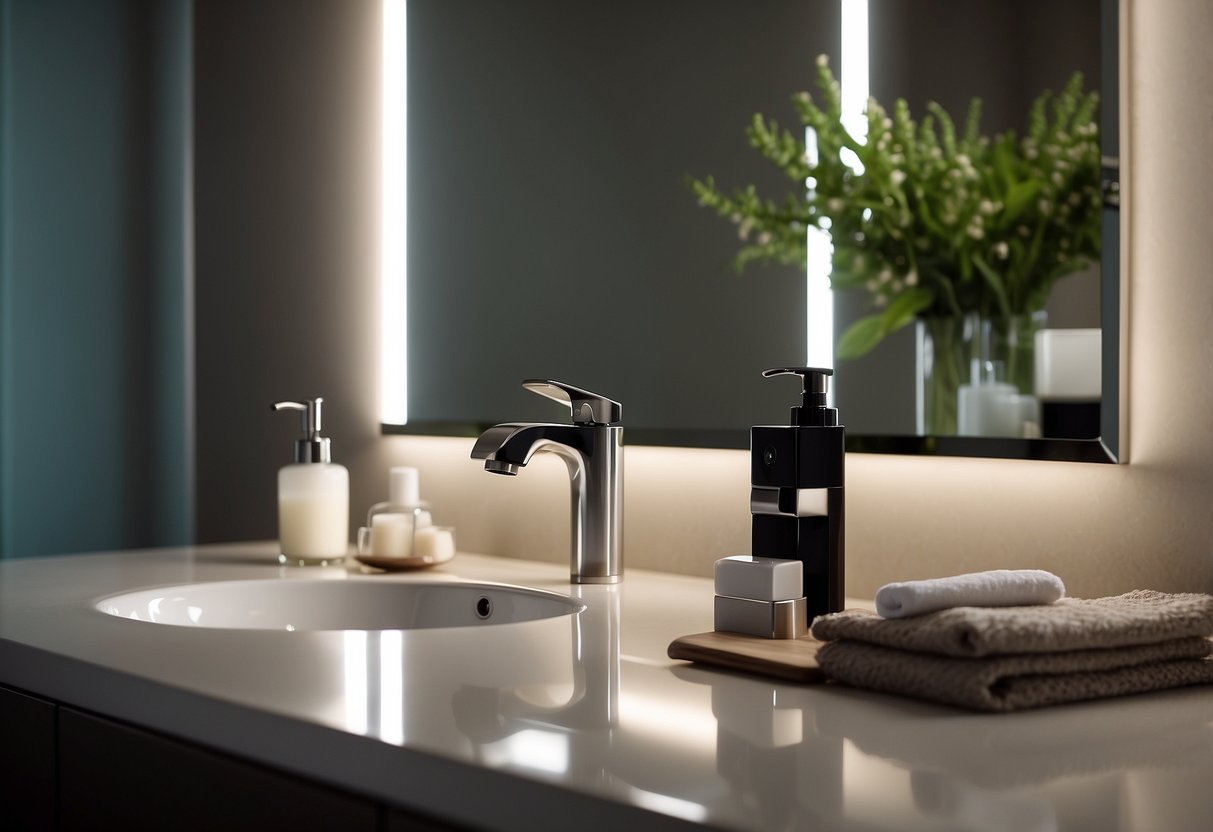
    A modern bathroom with sleek fixtures and soft lighting. A camera on a tripod faces a large mirror. Toiletries and towels neatly arranged

    We’ll explore various techniques and tips that are essential for high-quality bathroom photography. From using natural light to arranging decor thoughtfully, these strategies help create appealing and professional photos. By learning how to manipulate light and design elements, we can turn any bathroom into a masterpiece worth sharing.

    Stay tuned as we dive into more details about the best practices for bathroom photography. From shooting techniques to post-production tips, we’ve got everything you need to elevate your photography game. Understanding these basics will not only improve your skills but also impress your audience with stunning bathroom images.

    Key Takeaways

    Bathroom Photography Essentials

    To master bathroom photography, we need to understand the layout of the space, select the right camera gear, emphasize good lighting, and make effective use of natural light and bathroom fixtures. These elements come together to create visually appealing and professional images.

    Understanding Bathroom Layouts

    When photographing bathrooms, knowing the layout is key. By understanding the space, we can choose the best angles to capture it. For small bathrooms, consider using a focal length of around 24-35mm. This range allows us to include more of the room in the shot.

    Positioning the camera just outside the door can help capture more of the space. Always ensure that any curves, like those of sinks or tubs, are visible to create a natural look in our photos.

    Choosing the Right Camera Equipment

    Selecting the right camera equipment is crucial. Wide-angle lenses are great for capturing entire rooms, making them essential for bathroom photography. A lens with a 24-35mm focal length works well to show both the space and the details.

    Using a tripod can stabilize the camera, especially in low light conditions or when using a narrow aperture. A narrow aperture, like f/11 or higher, helps in getting sharp details throughout the image.

    Importance of Lighting

    Lighting can make or break a bathroom photo. Proper lighting highlights the features and aesthetics of the bathroom. Soft, diffused light is usually best for indoor spaces to avoid harsh shadows and glare.

    Natural light from windows often creates the most flattering and true-to-life images. If natural light is limited, using portable lights can help. Always avoid using overhead lights that are too harsh.

    Utilizing Natural Light and Fixtures

    Maximizing natural light is one of the best techniques in bathroom photography. Opening windows and doors can flood the space with soft, even light. This type of light helps in avoiding sharp shadows and brings out the natural colors and textures.

    Bathroom fixtures, such as mirrors and lights, can also be used creatively. Mirrors can reflect light and add depth to the photographs. Using the bathroom’s own lighting fixtures, like wall sconces, can create a warm and inviting atmosphere in our images.

    Preparation for Shooting

    A camera on a tripod, softbox lights, and a mirror in a clean, modern bathroom

    When preparing to photograph a bathroom, we focus on cleanliness, decor, and optimal positioning to enhance the space and highlight its best features. This involves thorough cleaning, thoughtful styling, and careful consideration of angles.

    Cleaning and Organization

    A spotless bathroom is crucial. We start by cleaning mirrors, wiping surfaces, and making sure there is no visible dirt or grime. It’s important to clean every corner, including the shower, sink, and toilet.

    Clutter can make a space look smaller. We remove personal items like toothbrushes, toiletries, and bathrobes. We also ensure towels are neatly folded and all toiletries are hidden. This creates an inviting and spacious environment for the photos.

    Styling and Bathroom Decor

    Styling the bathroom is about creating a welcoming yet elegant space. Small touches, such as neatly folded towels and a stylish soap dispenser, can make a big difference. We often add fresh flowers or a plant to bring a touch of nature.

    Choosing a clear color palette helps to avoid a busy look. We match towels and accessories to complement the main color scheme of the bathroom. Less is more in this case; too many items can make the space look cluttered.

    Positioning and Angles

    The right positioning is essential to capture the bathroom’s best features. We usually place the camera at a height that covers both the floor and ceiling to show the entire space. Experimenting with different angles can also lead to surprising results.

    We often shoot from the doorway to get a wide view of the room. Taking shots from different corners can highlight various aspects of the bathroom. Playing with angles helps us find the most flattering perspective.

    Shooting Techniques

    When photographing bathrooms, different techniques help capture the space effectively. We focus on capturing wide shots, detail shots, close-ups, and using reflective surfaces creatively.

    Capturing Wide Shots

    To make a bathroom look spacious, we often use a wide angle lens. A focal length of around 24-35mm works well. This lens captures more of the room in a single shot, making it feel larger.

    Sometimes, taking a panorama shot can help when the space is particularly tight. By stitching several images together, we can create a wide, sweeping view of the room.

    We ensure the bathroom is clean and staged properly before shooting. Towels should be folded, the toilet seat down, and clutter removed.

    Detail Shots and Close-Ups

    Highlighting specific features requires close-ups and detail shots. For this, we select a narrow aperture, such as f/11, to keep details sharp. Focus on unique fixtures like faucets, tiles, or decor items.

    To emphasize these elements, we often use a macro lens or simply zoom in. This approach allows viewers to appreciate the craftsmanship and design choices even in a small space.

    We also ensure good lighting, sometimes using a small LED light to remove any shadows, bringing out the textures and colors more vividly.

    Using Reflective Surfaces Creatively

    Reflective surfaces such as mirrors and tiles can add depth and interest to bathroom photos. We position ourselves to use mirrors to our advantage, capturing reflections that can show more of the room or highlight key features.

    Lighting is crucial when working with reflective surfaces. We avoid direct flashes which cause harsh reflections and instead use soft, diffused lighting. This technique reduces glare and highlights the reflective nature of surfaces without overwhelming the image.

    Angles are important too. By trying different angles, we can find the most flattering and functional reflection for our shot, creating striking and dynamic photographs that capture the full beauty of the bathroom.

    Post-Production Tips

    In post-production, we can enhance our bathroom photography by focusing on clarity, contrast, brightness, and saturation. Using the right editing software is crucial for achieving professional results.

    Editing for Clarity and Contrast

    To make our bathroom photos stand out, we should first address clarity and contrast. Reducing noise and sharpening details can bring out the best in our images. Clarity adjustments help in making textures, like tiles and fixtures, pop.

    Contrast adjustments can define light and shadow areas, making the elements in our photo more pronounced. It’s important to strike a balance to maintain a natural look. Adding too much contrast can make images look unnatural.

    Using tools like the Curves feature in Photoshop can help us fine-tune these aspects. Curves allow us to adjust the light levels separately, providing more control over the final output.

    Adjusting Brightness and Saturation

    Correct brightness and saturation levels are vital for bathroom photography post-production. Bathrooms often have uneven lighting, so adjusting brightness can help ensure our images look even and vibrant. Brightening shadowed areas can reveal important details.

    Saturation adjustments ensure that colors appear vibrant but still realistic. Over-saturating can result in colors looking fake and unappealing. It’s essential to keep skin tones natural if they appear in the shot.

    We might use tools like Lightroom to make these adjustments, ensuring each photo achieves a balanced look. Lightroom offers precise control over highlights, shadows, and overall exposure, perfect for different lighting scenarios in bathrooms.

    Choosing the Right Editing Software

    Selecting the proper editing software is crucial for effective post-production. Popular choices include Lightroom and Photoshop, each offering a wide range of editing capabilities tailored to our needs.

    Lightroom is excellent for batch processing and managing large numbers of photos. It offers extensive tools for adjustments and is user-friendly. Photoshop, on the other hand, provides an in-depth arsenal for detailed edits, like retouching specific areas and using layers to enhance particular elements.

    Deciding which software to use depends on our workflow and specific editing needs. Using both can sometimes offer the best results, combining Lightroom’s ease of use with Photoshop’s detailed controls.

    Additional Elements to Enhance Bathroom Photos

    By carefully adding thoughtful elements like artwork, plants, and candles, we can make bathroom photos more inviting and visually appealing. These elements can add depth, warmth, and character to the space.

    Incorporating Artwork and Plants

    Incorporating artwork into bathroom photography can add a unique touch and elevate the overall look. We can choose pieces that reflect the style of the bathroom, whether it’s modern, rustic, or elegant. Placing artwork above the bathtub or near the vanity can create a focal point.

    Plants can bring a touch of nature and freshness into the bathroom. Small potted plants on the windowsill or shelves are great options. We can also use hanging plants to save space while adding greenery. Both artwork and plants help to break the monotony of tiles and fixtures, making the bathroom feel more like a personal sanctuary.

    Adding Elements like Candles for Ambiance

    Candles are excellent for creating a cozy and relaxing atmosphere. Strategically placing candles on the edge of the bathtub, around the sink, or on a shelf can enhance the ambiance. We can use scented candles to add another sensory element to the space, making it more inviting.

    It’s important to arrange candles in a way that they highlight key areas without cluttering the space. Using candle holders that match the bathroom’s decor can tie the look together. The soft, flickering light from candles can make the bathroom look warm and welcoming in photos, adding an element of comfort and luxury.

    Bathroom Remodel Photography

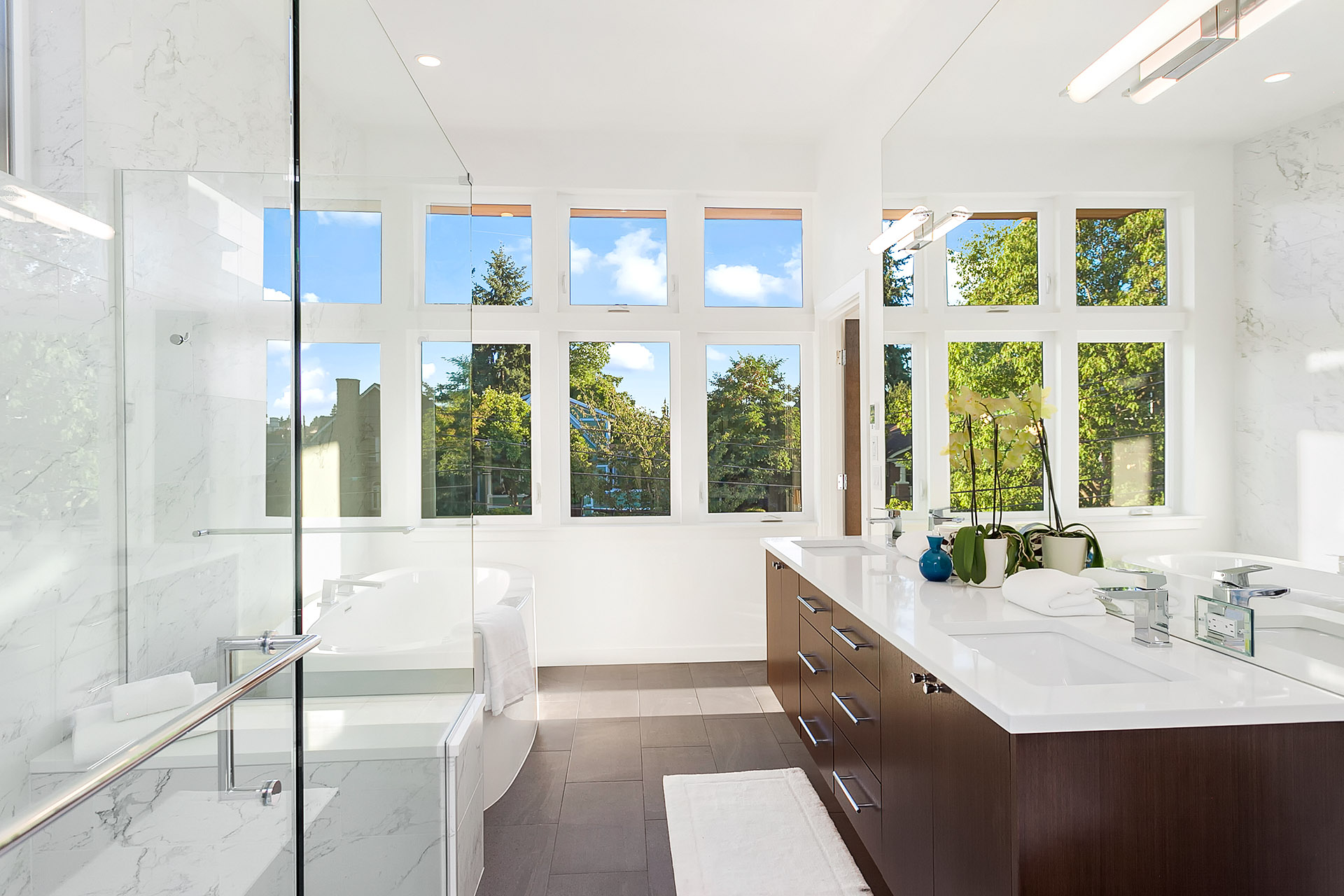
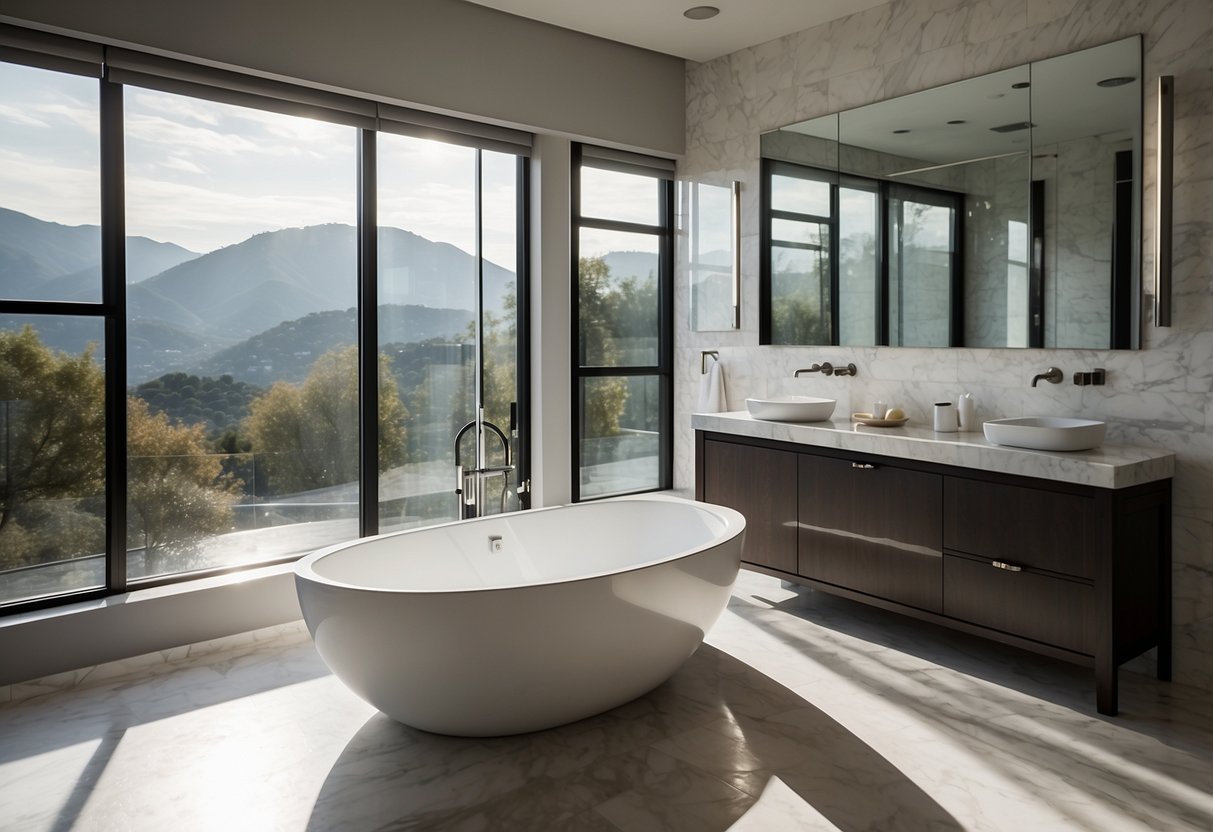
    A modern bathroom with a freestanding bathtub, glass-enclosed shower, marble countertops, and sleek fixtures. Light streams in through a large window, highlighting the clean, minimalist design

    Capturing the beauty and functionality of a bathroom remodel involves focusing on the design ideas, fixtures, and unique features. We aim to highlight everything from intricate details to standout elements like double vanities.

    Showcasing Bathroom Designs

    When photographing bathroom remodels, it’s essential to show the overall design theme. We capture wide shots to provide a full view of updated layouts and color schemes.

    Close-ups are useful for emphasizing textures such as tile patterns and countertop materials. Lighting plays a significant role in photography to bring out the room’s best features. Using natural light where possible enhances the true colors and textures.

    Photography of Modern Fixtures and Hardware

    Highlighting modern fixtures and hardware gives homeowners a clear view of the latest trends and styles. We focus on capturing high-quality images of popular items such as sleek faucets, minimalist showerheads, and elegant light fixtures.

    By incorporating different angles and lighting, we can emphasize the finish and detail of each piece. Including these close-ups helps to show the craftsmanship and design precision that set them apart.

    Highlighting Features like Double Vanities

    Double vanities are a popular feature in modern bathroom remodels, offering both practicality and style. We take care to photograph these from multiple perspectives.

    We highlight unique characteristics such as custom cabinetry, countertop materials, and sink designs. Proper lighting is crucial to showcase the vanity’s functionality and aesthetic appeal. By focusing on the storage solutions and accessory layouts, we can convey the benefits of this feature in everyday use.

    Optimizing Bathroom Photography for Social Media

    To captivate our social media audience, we need to focus on three key elements: cleanliness, lighting, and composition.

    1. Cleanliness:
    Before snapping any pictures, we should ensure the bathroom is spotless. This includes wiping down mirrors and glass, ensuring the toilet seat is down, and neatly arranging towels.

    2. Lighting:
    Natural light is our best friend. Taking photos during the day when natural light illuminates the room can create a warmer, more inviting feel. If natural light isn’t available, using soft white bulbs can mimic natural light effectively.

    3. Composition:
    We want to avoid taking photos from eye level or too high up. Instead, try capturing the bathroom from just above waist height. This angle prevents the space from looking cramped and creates a more flattering perspective as suggested by Drench.

    4. Staging:
    Good staging is crucial. We should make sure towels are nicely folded and that no toiletries clutter the counter. A simple, clean look works best. Dreamline Showers recommends setting the scene before taking any shots.

    5. Editing:
    Even the best photos can benefit from a bit of real estate editing. Adjusting brightness, contrast, and sharpness can enhance our images. Let’s be subtle in our edits to keep things looking natural.

    Frequently Asked Questions

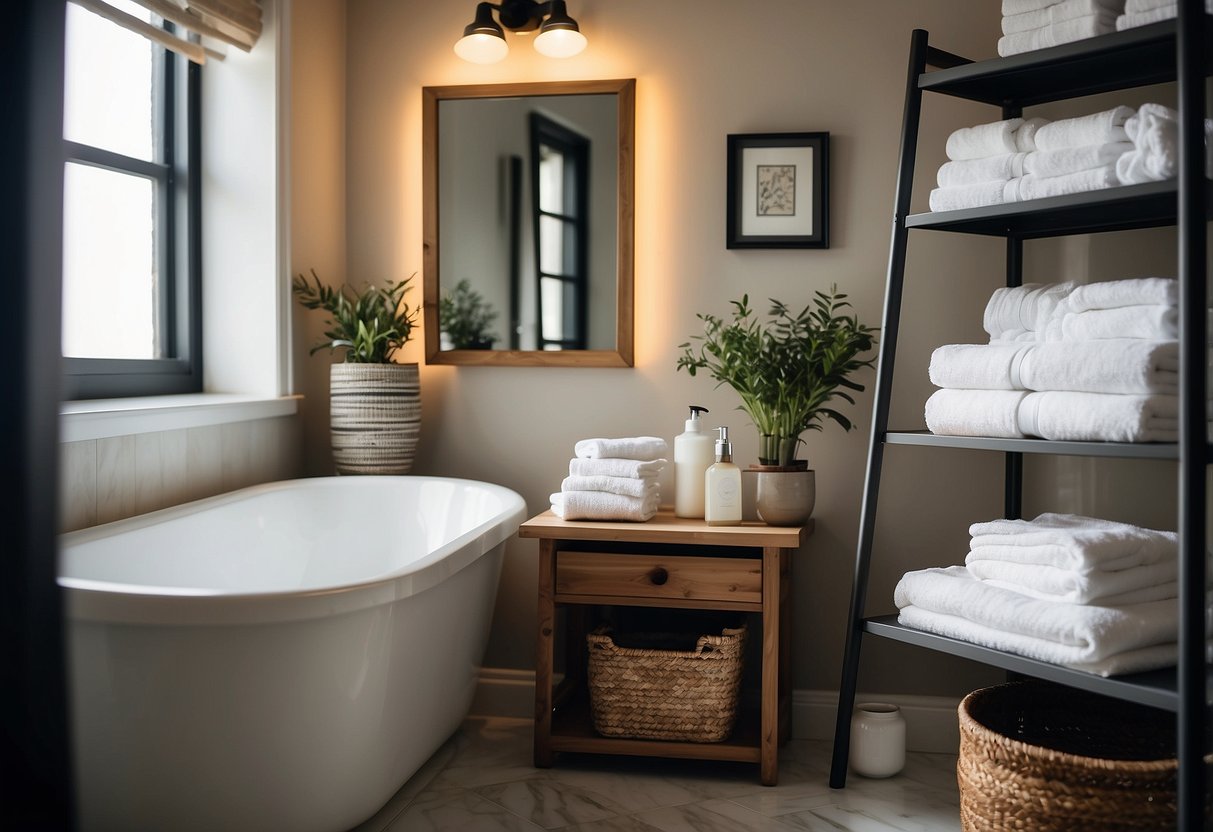
    A well-lit bathroom with a camera and tripod set up, a stack of clean towels, and shelves filled with neatly organized photography equipment

    In this section, we address common questions related to bathroom photography, including lighting techniques, legal considerations, and creative themes.

    How can you effectively light a bathroom for a photographic shoot?

    Effective lighting is key. Use natural light when possible, but if the bathroom lacks windows, use soft, diffused artificial light. Position lights to eliminate shadows and highlight key features.

    What are the legal considerations for taking photographs in public restrooms?

    It’s important to respect privacy and obtain necessary permissions when photographing in public restrooms. Check local regulations and ensure no identifiable individuals are captured without consent.

    Can you recommend any creative themes for decorating a bathroom with photography?

    Consider themes like aquatic life, botanical prints, or vintage bathroom scenes. Match the theme to the bathroom’s color scheme and decor to create a cohesive look.

    What are the best techniques for photographing the small space of a bathroom?

    Using a wide-angle lens can capture the entirety of small spaces effectively. Additionally, shoot from waist height to avoid a cramped look, and use mirrors to add depth and dimension.

    What type of photography works well for a bathroom’s wall art?

    Black and white photography or serene landscapes can add a calming effect. Abstract art and minimalist compositions also work well in maintaining a clean, modern look.

    How should one choose and position photographs to complement bathroom decor?

    Select photos that match or contrast tastefully with the bathroom’s color palette. Position them at eye level for the best visual impact, and use frames that resist moisture to ensure longevity.


    Editor’s note: This post was originally published in September 2017 and has been updated for comprehensiveness.

  • Top 3 Real Estate Photography Lighting Techniques: A Must Read For Beginners

    Top 3 Real Estate Photography Lighting Techniques: A Must Read For Beginners

    Lighting is crucial in producing high-quality photographs. Aside from determining the photo’s brightness and darkness, light also influences the mood, atmosphere, and tone of your real estate images. As a rookie real estate photographer, you should efficiently use lighting to your advantage.

    How you play around with lighting can significantly influence the quality of your real estate photos. It will be easier for you to let professionals edit images to maximize the impact of the lighting in your raw shots.

    To make the most out of lighting in real estate photography, take note of the tips below:

    Master the Use of Natural Light

    Natural light can do wonders for your real estate photos and is considered the best lighting source when taking pictures both indoors and outdoors. To become a successful real estate photographer, make a habit of opening windows and allowing the sun in when you start taking pictures.

    You can master the use of natural light by following these tips:

    • Schedule your shoot: When shooting for real estate photos, make sure that you’re doing it around midday, depending on where the property is facing. Avoid shooting indoors at sunset because the light changes color erratically during this time of the day.
    • Open all windows and blinds: Allow natural light to fill the room when you’re shooting. Open all windows and blinds and net curtains as a way to reduce window contrast.
    • Extinguish other light sources in the area: To avoid any color casts, turn off other lights when shooting indoors. This method also allows you to get uniformly white walls when editing your photos.

    Use a Flash When Natural Light Is Unavailable

    Natural light can transform any photos, but there are instances when this resource is unavailable. Use your camera’s flash to imitate natural light if you’re shooting on a schedule or location without natural light. This technique enables you to improve the property’s natural beauty without altering its accurate perception through real estate editing.

    The secret behind this trick is to mimic natural light coming from a particular direction. For instance, if the room’s window exposure isn’t bright enough, direct your camera’s flash at the same wall to get soft yet ample diffused light coming from that direction. For realistic results, exclude the bright spot on the wall from your framing.

    Turn on the Lights Indoors if They Add Character and Value to the Room

    Real estate photographers should determine when to use light fixtures when shooting indoors. There are instances when turning on the lights can add more character and value to the room. When shooting with lighting fixtures turned on, make sure that you capture all the details in the room, including the highlights and shadows.

    There are two ways to get the proper exposure, and the choice depends on your style and taste:

    • The first method is to use natural light and a bounced flash to fill the shadows in the room. If the light from outside the window is too strong, you can close the curtains.
    • The second method is to shoot multiple exposures and then merge them into one HDR image. This trick maintains all the details from the shadows and highlights of the room.

    Learn How to Edit Photos

    Your ability to play around with lighting is one skill, and your knowledge of using the best real estate editing software is another. These two skills are essential for producing the best real estate photos and becoming a successful real estate photographer.

    Now that you know some of the most effective lighting techniques in real estate photography, learn to use editing software.

  • How to Make Images Look More Twilight for Real Estate?

    How to Make Images Look More Twilight for Real Estate?

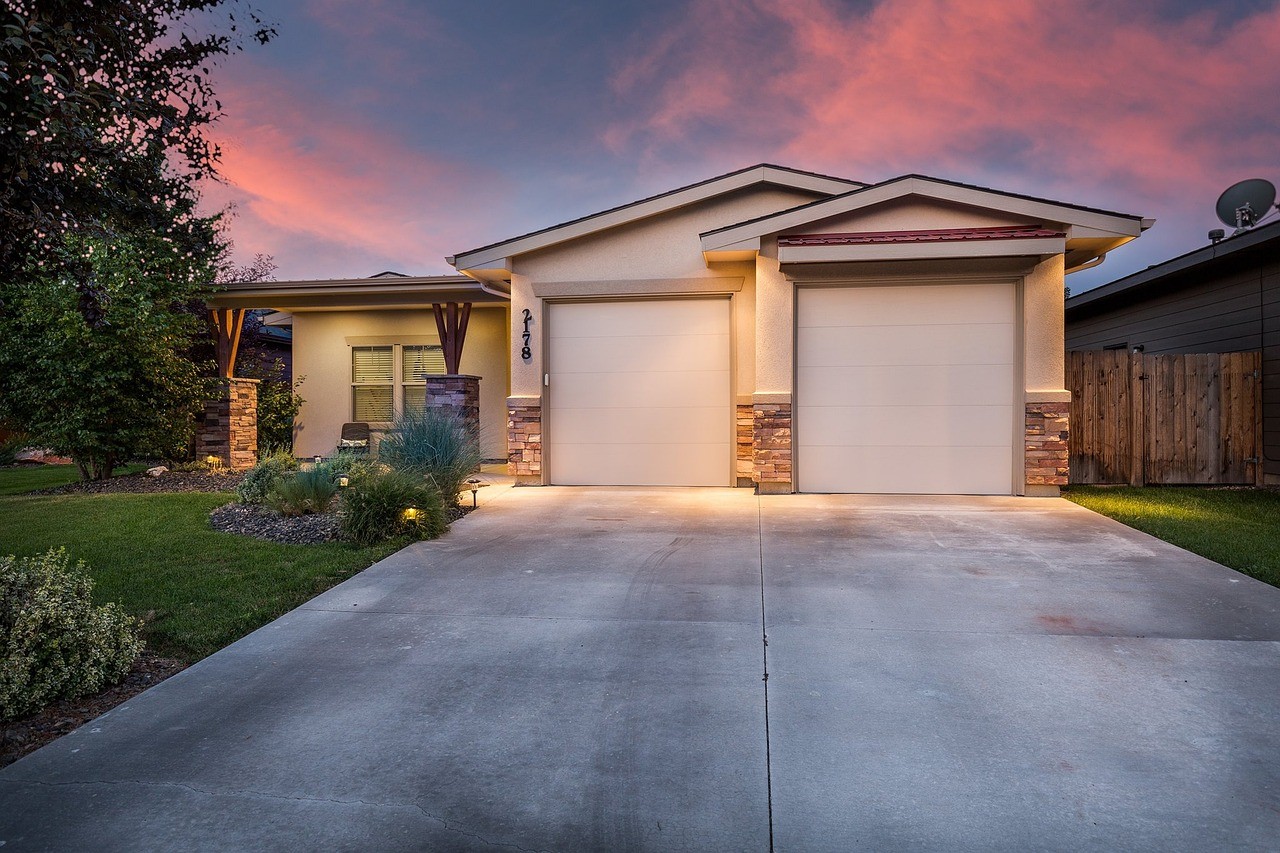
    When it comes to real estate sales and marketing, the quality of your photographs plays a significant role. If you’re looking to elevate your property images and make them stand out, utilizing techniques like virtual staging, object removal, and digital twilight effects can be a game-changer. In this article, we will explore how to enhance the twilight atmosphere in your real estate photos and create a captivating twilight aesthetic that captures the attention of potential buyers.

    Twilight photo editing is the key to achieving stunning twilight imagery. By following a few expert tips and techniques, you can enhance the dusk or sunset vibe in your images and create a mesmerizing twilight look. Let’s dive into the details:

    Plan Ahead for the Perfect Shot

    Planning is crucial for capturing breathtaking twilight photos. Check the weather forecasts and choose a day with clear or partially cloudy skies, as this can enhance the twilight effect. Avoid shooting on days with rain or storms, as they can interfere with the desired lighting conditions. By selecting the right day, you set the stage for creating stunning twilight visuals.

    Embrace the Golden Hour

    The golden hour, which occurs shortly after sunrise or before sunset, is the ideal time to capture twilight images. During this magical time, the natural lighting is softer, warmer, and bathes everything in a golden hue. Take advantage of this period to shoot your photos and capture the enchanting lighting contrasts that define twilight.

    Master Your Camera Settings

    To achieve the perfect twilight look, it’s important to adjust your camera settings accordingly. Use a low ISO to minimize noise and ensure clean, sharp images. Opt for a wider aperture (lower f-stop value) to create a shallow depth of field, which adds a dreamy and romantic quality to your photos. Additionally, consider shooting in RAW format to have greater flexibility during the post-processing stage.

    Enhance Colors and Contrast

    During post-processing, you can enhance the colors and contrast to make your images look more twilight. Adjust the white balance to create a warm tone that reflects the natural lighting of twilight. Increase the saturation and vibrancy of the colors to bring out the richness of the sky and surrounding elements. By adding contrast, you can create a captivating and dramatic effect that highlights the different lighting intensities present during twilight.

    Graduated Filters for Dramatic Skies

    To intensify the twilight atmosphere in your photos, experiment with graduated filters. These filters darken specific areas of the image, such as the sky, while maintaining the correct exposure in other areas. By applying a graduated filter to the sky portion of your twilight images, you can enhance the colors, add depth, and create a visually stunning scene.

    Utilize Post-Processing Software

    Post-processing software, such as Adobe Photoshop or Lightroom, can be powerful tools for achieving a twilight look in your real estate photos. Experiment with adjustments like levels, curves, and selective color editing to fine-tune the atmosphere and overall aesthetics. These tools allow you to have complete control over the final result, enabling you to bring out the desired twilight vibe and create captivating visuals.

    Pay Attention to Composition

    Composition is key in creating a captivating twilight aesthetic in your pictures. Look for interesting elements within the frame, such as silhouettes of trees or buildings against the colorful sky. Utilize leading lines or framing techniques to guide the viewer’s attention and create a visually engaging composition. By carefully composing your shots, you can enhance the overall ambiance and create captivating visuals that draw viewers in.

    By following these expert tips and techniques, you can elevate the twilight atmosphere in your real estate photos and create captivating visuals that leave a lasting impression on potential buyers. Whether you’re shooting residential properties or commercial spaces, mastering the art of twilight photography can make a significant difference in the appeal and marketability of your listings.

    In conclusion, by understanding the techniques and nuances of twilight photo editing, you can transform your real estate images into captivating visuals that highlight the unique charm of dusk and sunset. With careful planning, shooting during the golden hour, adjusting camera settings, enhancing colors and contrast, utilizing graduated filters, leveraging post-processing software, and paying attention to composition, you can achieve a mesmerizing twilight aesthetic in your real estate photos. These expert tips will help you create stunning visuals that captivate viewers, increase interest in your listings, and contribute to the overall success of your real estate sales and marketing efforts.

  • The Best Mirrorless Cameras to Use for Real Estate Photography

    The Best Mirrorless Cameras to Use for Real Estate Photography

    Real estate photographers use various equipment to capture properties in the best possible ways. This includes a tripod for more stable photos, multiple lenses, and, most importantly, a camera. After all, one cannot begin a career in real estate photography without preparing the right tools to help them achieve the best results for their clients.

    Whether you are an aspiring or experienced real estate photographer, getting the right camera for your projects is essential. Buying a mirrorless camera is among the best options for this task for many reasons. The first is that they’re lightweight, thanks to their lack of a reflex mirror. This makes them highly portable for multiple shoots or bigger properties. Additionally, these display a digital preview of your composition on the electronic viewfinder—unlike DSLRs—letting you see what your shot would look like before capturing it. This lets you change your settings to achieve a better photo and reduce editing time.

    [lwptoc]


    TL;DR: If you’re looking for a mirrorless camera for real estate photography, here are the best options on the market:

    Sony a7R III


    The Sony a7R III is one of the most popular mirrorless cameras today for good reasons. It has a 42.4 MP sensor for exceptional image quality, perfect for highlighting property details. It also has 5-axis in-body image stabilization, a feature which effectively reduces camera shake—especially for handheld shots. This is advantageous when moving around to get the best angles of a room or property. Finally, it can focus quickly on its subject, allowing for faster image-capturing time and less manual focus on your part.

    These features, along with its compact design, make the Sony a7R III one of the best options for real estate photography.

    Nikon Z7 II


    The Nikon Z7 II is an all-arounder. It has a wide range of settings to adjust, such as getting the correct exposure when a room has low lighting. It also has a low-base ISO of 64, making it great for extremely bright interiors. ISO settings are important to consider when getting a camera for real estate photography, as they enable you to adjust its light sensitivity. This is crucial for your career since there are instances when you can’t choose the time of day to take photos of a property.

    Aside from these, the Nikon Z7 II has a 45.7 MP full-frame sensor for excellent image resolution and good build quality, ensuring durability for multiple shoots.

    Canon EOS R6


    Featuring a 20.1 MP full-frame sensor and Dual Pixel CMOS AF system, the Canon EOS R6 is a full-frame mirrorless camera that promises high-quality images with great detail. This results in sharp, well-focused photos of properties and their details, such as bathroom hardware and wood accents. It also has an ISO range of 100-102400, offering flexibility in various lighting conditions for both indoor and outdoor property photos.

    Thanks to its high-end performance capabilities, this camera is one of the best for real estate photography.

    Panasonic Lumix S1R


    This camera’s 47.3 MP full-frame sensor delivers stunning images that accurately capture colors and details. It has a touchscreen LCD electronic viewfinder for quick controls and camera setting adjustments suitable for photographers who frequently experiment with different settings. The Panasonic Lumix S1R also has Bluetooth and WiFi connectivity for fast photo transfers to a phone or laptop, making it convenient for on-the-spot editing or showing photos to a client in real-time. Overall, this camera ensures high-quality images for real estate photographers.

    Getting a mirrorless camera for real estate photography promises exceptional image quality, portability, and convenience for photographers. Choose among these options today to upgrade or start building your equipment.

  • 5 Exceptional Ways to Shoot Real Estate Photos with Your iPhone 14 Pro

    5 Exceptional Ways to Shoot Real Estate Photos with Your iPhone 14 Pro

    Real estate marketing has mastered the art of understanding how photography influences the minds of potential clients. Buyers sift through thousands of online photographs, so your photos must instantly capture their attention when they see it. Consequently, real estate photo editing is one of the most crucial elements in selling a home on social media or through listings.

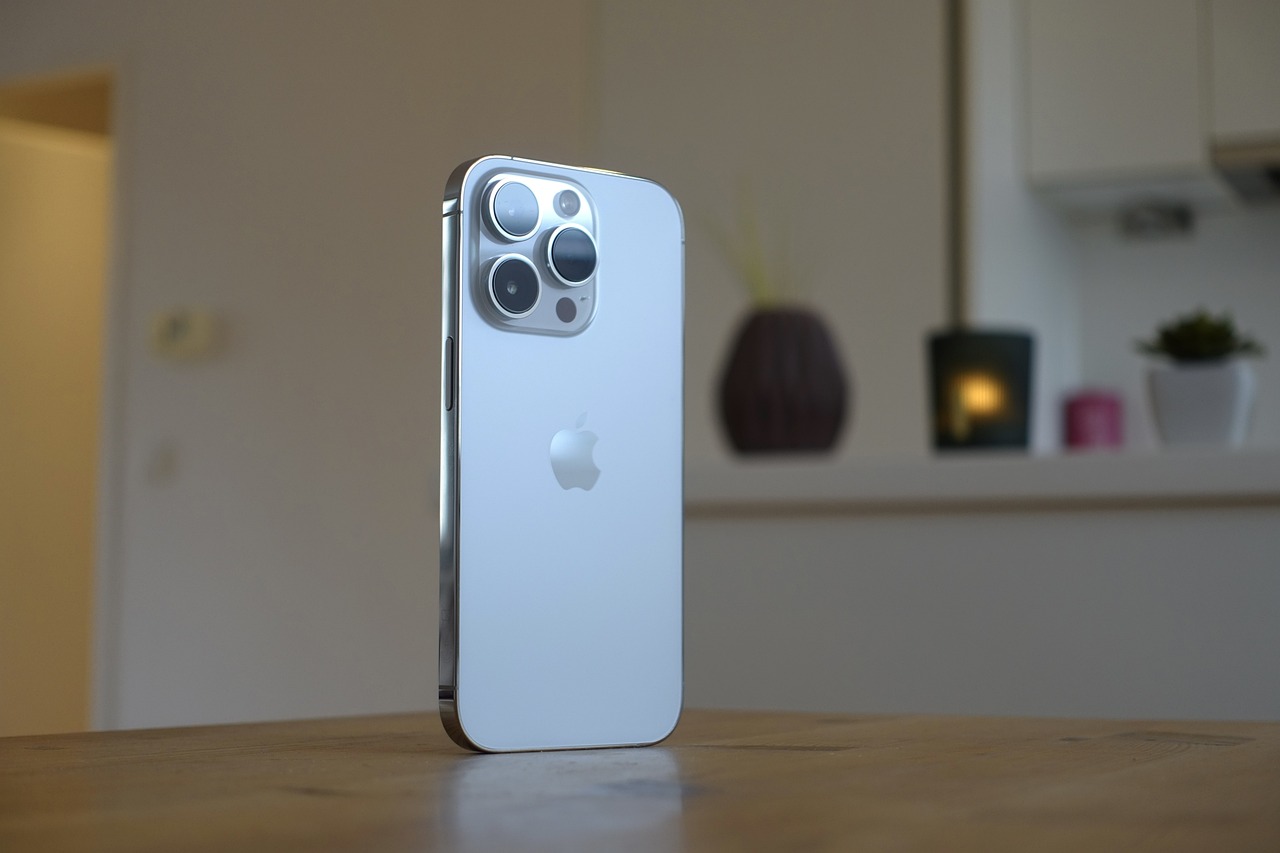
    The iPhone 14 Pro enables you to effortlessly capture a picture of the home or property for sale and share it with prospective buyers. However, it can be challenging to capture a standout shot that isn’t too out of the ordinary, even with the assistance of professional real estate editing services.

    iPhone 14 Pro Camera Features

    The iPhone 14 Pro is equipped with a 48MP primary, a 12MP ultra-wide, and a 12MP telephoto lens on the back camera, each offering different features that impact zooming and the capture of details, whether through photography or video. Ways to shoot real estate photos with your iPhone 14 Pro include utilizing these lens options to capture various perspectives and enhance the overall quality of your images. Once you’ve taken the photos, it is important to get them edited correctly, imagine the luscious image you’ll have when combined with real estate editing services.

    In addition to its versatile camera setup, the iPhone 14 Pro also boasts a high dynamic range (HDR), which provides a wide range of hues and colors compared to the standard dynamic range (SDR). This feature, coupled with Dolby Vision for videos, allows for stunning visual results that real estate photo editors will surely appreciate.

    To make your real estate photography experience even better, consider using accessories like tripods and gimbals. These can assist you in capturing steady shots and making the entire photo shoot process easier, particularly if you’re working alone.

    How to Take Marketable Real Estate Photos with Your iPhone 14 Pro

    Of course, the tool is only half the work. Having an excellent smartphone can only take you so far, and it is essential to have the right skills and mindset when taking photos. Your skills will help you maximize your device’s potential for the best results.

    To achieve practical and beautiful real estate photos, it is important to cover the basics and understand how to use your iPhone 14 Pro effectively:

    1. Walk around the home before you start shooting

    As a realtor, you may have seen hundreds of homes; however, each property is unique, and the location may appear new or unfamiliar to you.

    To get the most appealing shots for your real estate photo editors and clients, you need to feel comfortable with the property. Additionally, this will help you connect more clearly with the property’s value, enabling you to better understand why you need specific types of photographs.

    Before editing real estate photos, it’s important to thoroughly explore the entire home or property. This will allow you to stage it effectively and prepare for your shoot. By doing so, you will know which angles to capture, the best time of day to make your property stand out, and which post-production techniques to employ.

    2. Declutter

    Your iPhone 14 Pro may have great camera features, but more than that is needed to shoot real estate photos. Powerful imaging is critical to a successful deal, and removing irrelevant elements before going to real estate editing services is essential.

    For example, photographing the bedroom with socks hanging down the edge of the bed may be a turn-off to potential clients. It’s a great thing that you can digitally declutter photographs should there be any missed spots.

    The goal of photo editing for real estate is for the viewer to feel happy, comfortable, and safe; having that sense of security makes the property look appealing and trustworthy. They will feel inspired or safe about buying if the rooms look put together even before you shoot real estate photos with your iPhone 14.

    3. Take different angles of shots

    Never underestimate the appeal of variety, especially when shooting with an iPhone 14 Pro. It may appear redundant; nevertheless, this will significantly help you select the best photo for your photo editing for real estate.

    Taking different angles of shots is essential as it shows other emotions and portrays additional details of the property in a big way. Different angles or perspectives are complicating your real estate editing services since choosing the perfect picture with the proper angles creates a remarkable photo aspect.

    4. Utilize natural light and flash

    Lighting creates perceptions of items in photo editing for real estate, so learning how to use it to your advantage is essential for compelling photography. The iPhone 14 Pro camera’s preview also shows you what it looks like with the proper lighting.

    Real estate photo editors must balance the light to help convey feelings to potential clients since different lighting types are set the mood. There’s a technique that most photographers use wherein they combine a soft natural light and contrast it with one shot with a flash.

    5. Edit the photos that you captured

    The iPhone 14 Pro is capable of taking great high-definition photos, making things easier for real estate photo editors. If you want to know how to shoot real estate photos with your iPhone 14, you do not need to download additional photo editing software to make your images perfect. Feeling like you can’t get the most out of your pictures when capturing them alone is fair. Choose the photo, modify the brightness and color, and rotate or flip the image according to the desired orientation.

    If the lighting is awful that day, you can use iOS filter effects to make the picture appear more vibrant. The iPhone camera has a built-in filter that is designed to make life easier for real estate photo editors, using manual override under harsh lighting conditions.

    Editing the photos that you have taken is necessary. The quality of photo editing for real estate is also important as it helps your business as the outputs look more professional, and you will showcase your real estate photography skills.

    Bottomline

    You can create stunning real estate images with the assistance of real estate photo editors. In addition to that, it is essential to capture the perfect angles and prepare the property before the photo session to attract a larger number of buyers. However, the iPhone 14 Pro simplifies these tasks and provides various features that effortlessly enhance the photographs, making them appear beautiful.


  • The Top 4 Best Photography Filters for Beautiful Real Estate Photos

    The Top 4 Best Photography Filters for Beautiful Real Estate Photos

    Modern technology has enhanced the quality of digital filters to improve the appearance of plain photographs. Nowadays, you can easily edit images on your smartphone with creative preset app filters for various purposes like social media posting or marketing.

    Most available filters are whimsical, imaginative, and romantic, so they’re not great for post-production of real estate images. If you’re fond of social media, you may use some filters to add spice or excitement to your selfies and video calls.

    You need the best filters for real estate pictures; but initially, you have to know why filters are essential in the first place.

    The importance of using filters

    There are different natural elements affecting photographs that you can’t control, like sunlight brightness or UV rays. You may not have enough time to wait for a favorable temperature or setting, so filters can help you achieve good color, saturation, and temperature balance.

    You should use filters that are as natural as possible if you want a suitable photo filter for selling house. After all, one of the primary reasons why you have to make excellent real estate photography involves bringing in sales, improving marketing efforts, and completing conversions.

    Filter shapes

    You may be ready to purchase your first filter but don’t know which is the best filter for home photos. Before going into the different filters for real estate photography, let’s address the filter shapes. Currently, circle and square are the two standard filter shapes available in the market. 

    Circular filters

    A circular filter can be attached directly in front of your lens, so purchase one that fits the corresponding lens diameter; this information is available on your lens cap backside. If you want your filter to accommodate different camera diameters, you can purchase a step-down or step-up ring.

    Square filters

    Square filters can sometimes come in square or rectangular form and are part of an attachable contraption, typically in a bracket attached to a round ring that you can screw in front of your camera lens. A square or rectangle filter is stackable and easy to change, making it an excellent photo filter for selling houses. You need to plan if you want to purchase the bracket or filter system so that you don’t end up wasting money on it. Eventually, you’ll develop your style and technique using different filter combinations.

    You may wonder what filter do real estate photographers use to create successful listing images. Here are some of the primary camera filters for beautiful real estate photos:

    1. Ultraviolet (UV) Filters

    The Ultraviolet (UV) filter is perhaps one of the essential filters newbie photographers use. Ultraviolet light has shorter wavelengths than visible light, and the Sun releases a full ultraviolet radiation spectrum defined as UV-A, UV-B, and UV-C. Even though it is almost unnoticeable to the human eye, it can cause blue tones in photographs. Before using a Photoshop filter for selling house, you must ensure that your photos don’t have unnecessary bluish tones that would ruin the composition and color balance.

    Here are the pros and cons of UV filters:

    • Reducing UV light exposure
    • Protecting lens from scrapes and scratches
    • Protecting lens from liquids, dust, sea salt, and other elements
    • Slightly lowering image quality
    • Not protecting the camera from internal damage
    • Reducing the light passing into the camera

    A UV filter is one of the essential real estate photography filters, especially for those operating under harsh sunlight, like outdoor real estate photographers.

    2. Circular Polarizer (CPL) Filters or Polarizers

    Photographers often use a circular polarizer filter (CPL) for landscape, outdoor, and street photography. The CPL is one of the best filters for real estate pictures, especially when shooting outdoor real estate property listing photos.

    Here are the pros and cons of CPL filters:

    • Reducing reflections
    • Increasing saturation
    • Enhancing cloud details
    • Allowing limited light
    • Not ideal for indoor shoots

    A CPL filter is useful when shooting in high sunlight and not ideal when shooting images for virtual staging.

    3. Neutral Density (ND) Filters of Varying Densities

    Adobe Lightroom presets could improve any image, but the next item on the list is one of the most versatile and arguably the best filter for home photos. Photographers use a neutral density (ND) filter to create a shallower depth of field, create motion with a slow shutter speed, and reduce light over the whole picture. ND Filter comes in square and circle variants.

    Here are the pros and cons of ND filters:

    • Capturing a beautifully shallow field depth using a wider aperture
    • Producing motion blur and long exposures for a more extended duration using a slower shutter speed
    • Creating dramatic effects for lawn, foliage, sky, fog, and cloud scenes

    There is more than one ND filter type with different densities for advanced photographers, so feel free to experiment and explore which suits your style best.

    4. Graduated Color Filter

    If you want that wow factor in one of your real estate listing photos, you can use the graduated color filter to help achieve the best real estate photographs. This filter lets you get creative with the skyscape and brings you the same effect as a twilight replacement edit. It allows you to enhance the color on one half of the photo and retain the normal lighting condition on the other.

    When you ask what filter do real estate photographers use, the graduated color filter is not at the top of the list since it presents a more creative approach than the usual realistic property listing photos. It has a specific purpose, mainly to enhance outdoor views such as the sky or sea. 

    Conclusion

    Filters improve real estate photographs, whether a photoshop filter for selling house or a camera filter, especially when you’re up against millions of real estate listing photos. Most of the ones mentioned in this list are filters ideal for outdoor property images.

    If something is wrong with your raw shoots, you may consider getting filters on your digital single-lens reflex (DSLR) camera. Phixer and most post-production professionals know what kind of filter works best for specific real estate listings.

  • How Excellent Exterior Shots Make Huge Real Estate Difference

    How Excellent Exterior Shots Make Huge Real Estate Difference

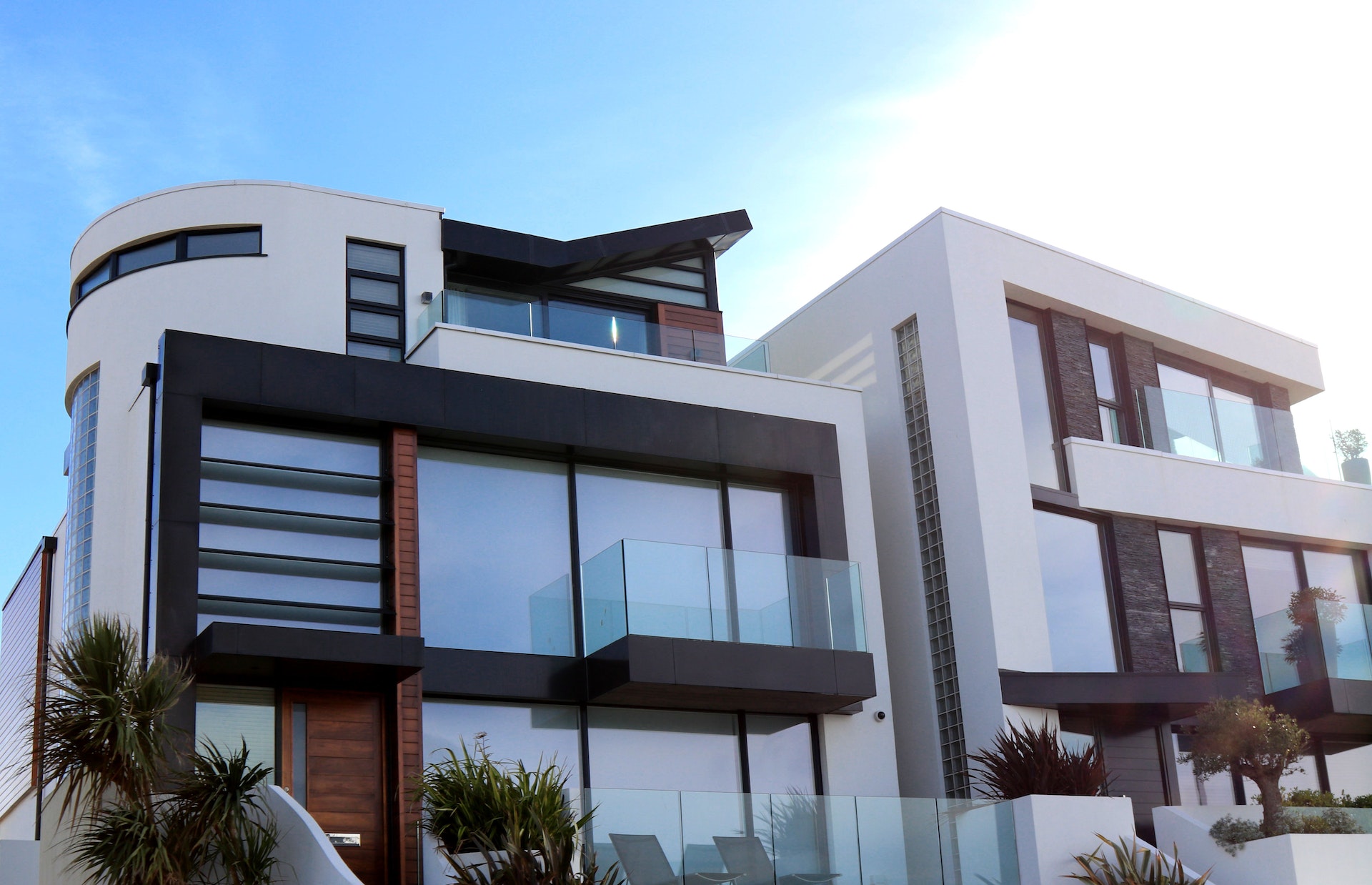
    Most of the time, real estate clients decide whether they would pursue further or not just by seeing the exterior shots of a listed property. Thus, showcasing the facade of a house, office building, or apartment is an agent’s make-or-break opportunity.

    It is also important to back up a stunning photo with realistic expectations shall the prospective client decide to visit the property personally. Still, the first phase of getting leads and possible sales relies heavily on head-turning imagery. Here are the hows and whys about using excellent exterior shots in real estate.

    [lwptoc]

    Customer’s First Impression

    Wherever you list properties, the law of first impression applies. Using the main image, the goal is to make prospects see a picture of themselves and their family living in that house. It should give a lasting impression that it is an ideal place for living before laying out other perks in an attempt to close the sale.

    However, many clients in real estate knew the tricks behind these over-enhanced photos. Hence, staying honest with presenting the property and combining this magnificent showcasing with truthful description is crucial.

    The Challenges Of The Market’s Short Attention Span

    As mentioned, leaving a remarkable impact on the listing’s main picture keeps your prospects glued and open to your pitches. Although they are spellbound, it won’t last very long because other property listings will try to grab their attention.

    Hence, you need to figure out a way to survive the consumers’ quick attention span. Marketers know that one of the best ways to counter this is a constant reminder through email and other channels. Fortunately, you can make it more effective with brilliant headlines and more fantastic exterior photos of the property they’ve previously seen as its content.

    The Added Luxury Vibe: Shoot That Pool!

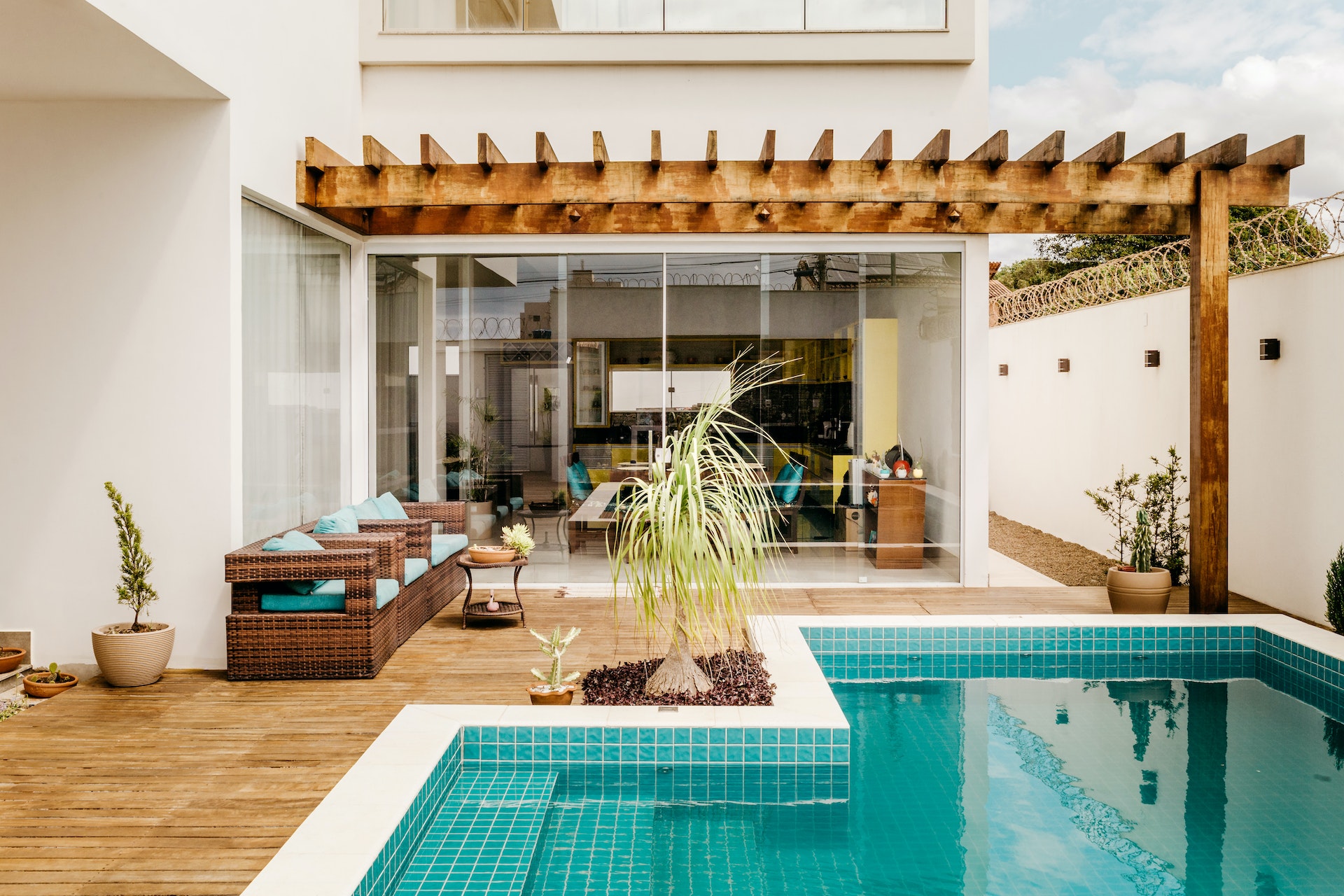
    Some real agents have discovered the allure of a pool in its pristine condition. Thus, top-performing listings in terms of clicks and lead generation were from inventories that showcased exteriors of properties that included a clean swimming pool.

    Compared to the image of a sloppy lawn, both underground pools and above ground pools emit a luxury vibe. This scene strongly conveys that the property is a perfect deal for a buyer seeking gratification from a magnificent real estate purchase.

    While shooting pool sceneries is not difficult, it still requires precise execution for the best results. Experts would advise cleaning up the setting and offering good lighting to capture a visual material that will yield fantastic sales and lead generation outcomes.

    Takeaway

    If set side by side with listings that display bathrooms, entertainment areas, and living rooms, presentations that involve exteriors as the welcoming image perform a mile better. As such, not exhausting the faculty of excellent exteriors is a missed opportunity for any veteran marketer or salesperson utilizing today’s digital channels.

    Incorporating exterior photography with your arsenal of sales abilities is a good start in establishing a gap between you and your real estate rivals. As the competition becomes tighter, it is essential not to miss any chance that could put your presentations above others.

  • Top 5 Ways to Begin a Career in the Real Estate Photography Business 2022

    Top 5 Ways to Begin a Career in the Real Estate Photography Business 2022

    Photography is one of the industries that will never go out of style as long as digital visual media exists. You may be wondering, “is real estate photography profitable?” especially when faced with intense competition from people thriving in the industry for decades, like post-production specialist Phixer. You may be intimidated to enter such a field at this stage.

    The good news is that it’s never too late to start your real estate photography career, especially with rising demand and market movements as people go from urban to rural and vice-versa. The pandemic has shifted people’s priorities, and the reopening of communities has improved real estate value.

    Read on to learn more about how to become a real estate photographer 2022.

    Here are the top five methods to start a real estate photography career:

    1. Start with a Goal in Mind

    According to Benjamin Franklin, failing to prepare is preparation for failure. One of the first methods how to get into real estate photography is to create a plan or strategy to ensure you know how to go from start to success. A solid plan will help you build an excellent real estate photography career foundation.

    A simple way to set your plans is through the SMART goal-setting:

    • S – Specific. Specify your career direction from what you’re going to start on to what specialization you want to pursue (outdoor properties photographer, photographer for virtual staging, etc.)
    • M – Measurable. Measure your success metrics by bookings or projects per month.
    • A – Attainability. Check if your goals are achievable according to the current market activity and projections.
    • R – Realistic. Compare your plans with other real estate photographers you know to determine if they’re realistic.
    • T – Time-bound. Set a deadline for all of your efforts to ensure timeliness.

    When you have a reasonable goal with the right expectations, you can efficiently work toward it without distractions or discouragement. Just put your mind to it, and focus on your objectives. You might start slow, but you’ll eventually book more projects.

    2. Prepare the Tools You Need

    Investment in the right tools is how to make money as a real estate photographer and build a long-lasting career. Your equipment will help determine your success in the industry, and you don’t have to buy the most expensive camera as long as your know your camera settings.

    Here are some of the things you need to succeed in your real estate photography career:

    • Photography equipment. You need photography tools like Digital Single-lens Reflex Camera (DSLR) cameras, lenses, lighting, tripods, and drones for aerial shots.
    • Website or social media page as a portfolio. It would help if you had a portfolio to store your shots and samples for future clients.
    • Marketing strategy for promotion and sales. You need to promote your photography business for profit and sustainability.
    • Post-production software, application, or company. You should edit your photos according to real estate standards. If you’re too busy to do post-production, you can hire experts in the field.
    • Industry best practices and language. Several terms are exclusive to real estate photography, like virtual staging, twilight editing, and lawn replacements.

    You can work with what you currently have, as long as you don’t forget to upgrade your equipment from time to time. In photography, you can start with the basics and work towards specializations and better instruments.

    3. Network with Real Estate Professionals

    Having an extensive network of real estate professionals is one of the key ways how to become a real estate photographer 2022. Your friends and acquaintances in the industry will be your clients, or they will introduce you to people who would book you for projects.

    It would help if you were well-acquainted with how they operate and when they need your services. Since real estate professionals often communicate with their peers, one good recommendation could open doors for you.

    4. Understand the Principles of Shooting Great Real Estate Photos

    Practicing and improving your skills are some ways how to get into real estate photography. People don’t instantly become successful niche photographers overnight, so you should give yourself enough room to start, understand the basics and improve according to growing demand and developing standards.

    Here are some of the principles you need to understand while pursuing a real estate photography career:

    • Considerations for excellent outdoor property photography
    • Factors for beautiful indoor home or building photography
    • Shooting angles, lighting equipment, and camera lenses to use
    • Camera settings like dynamic range
    • Marketing value of your photos
    • Real estate photography industry standards
    • Familiarize real estate listing photo compositions or presentations

    You must understand the market needs to fulfill them successfully since your clients will request one or more of those shots. You must also communicate in the language real estate professionals speak, so familiarize yourself with their terminologies.

    5. Take Care of Post Production

    Post-production is one of the critical steps in real estate photography, and if you’re good at it, it’s one of the many ways how to make money as a real estate photographer. You don’t have to do it yourself, and there are apps available for real estate agents that help edit photographs. You can also collaborate with editors who can do the task better and faster.

    However, you will get more clients if you provide final photos ready for posting. Because of this, some photographers opt to hire real estate photography editing experts while others learn to do it themselves. If you master real estate editing, you could also start a real estate photo editor career.

    Conclusion

    Most people would ask is real estate photography profitable before pursuing a career in real estate photography. The answer lies in how well you create the foundation to build your career and develop your real estate photography skills to match growing and upgrading standards.

    As long as you continue practicing and improving your craft, more clients will book you for real estate shoots. As technology improves, you can also provide real estate virtual tours, augmented reality, and virtual reality photography services.